How Much Paint Do I Need for a Room? Square Footage Formula & Chart
Learn how to calculate how much paint you need for any room, bedroom, or accent wall by square feet. Includes door/window deductions, ceiling formulas, and gallon charts.
 David Miller, Professional Painting Estimator
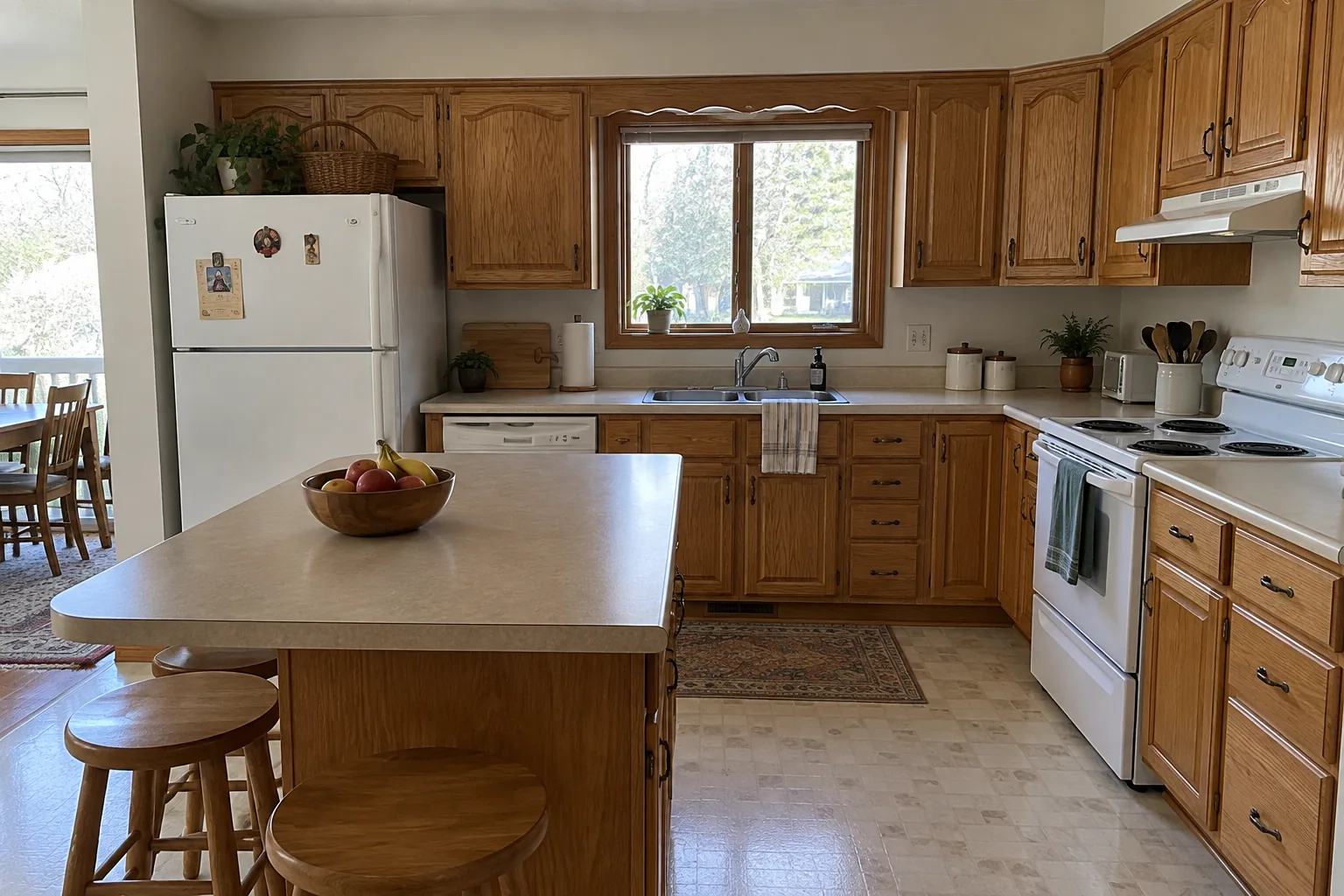
Buying one gallon too few mid-project means stopping with wet edges drying on the wall; buying two gallons too many leaves expensive tinted cans sitting in the garage. Fortunately, estimating paint quantities is straightforward once you separate wall perimeter area, ceiling square footage, and substrate absorption.
If you want an instant estimate with custom container prices, open our interactive Paint Calculator & Coverage Estimator. Below is a step-by-step example you can adjust to your room and selected product.
The 3-Step Formula to Calculate Room Paint
1. Measure gross wall square footage
Measure the length of all walls you plan to paint and add them together to find the room perimeter, then multiply by the ceiling height from baseboard to crown molding:
- Gross Wall Area =
2 × (Room Length + Room Width) × Wall Height - Example (12 × 15 ft living room with 8 ft ceilings):
2 × (12 + 15) × 8 = 432 sq ft
2. Subtract unpainted doors and windows
Measure each opening. The following dimensions are examples for this calculation:
- Standard interior or entry door: subtract 21 sq ft (3 ft × 7 ft)
- Standard bedroom or living room window: subtract 15 sq ft (3 ft × 5 ft)
- Double patio sliding door or French door: subtract 40 sq ft
Continuing our 12 × 15 ft example with 1 door and 2 windows: 432 - 21 - (2 × 15) = 381 sq ft of net paintable wall area.
3. Multiply by coats and divide by coverage rate
One standard US gallon of interior architectural latex paint covers 350 to 400 square feet per coat on smooth, primed drywall. This example uses 2 finish coats; follow the selected product’s instructions:
- Total Coverage Needed =
381 sq ft × 2 coats = 762 sq ft - Gallons Required =
762 ÷ 350 = 2.18 gallons(2.39 US gallons including a 10% allowance → buy 3 one-gallon containers)
Quick Reference: Paint for Common Room Sizes
These examples use 8 ft walls, two coats, 350 ft²/US gal and a 10% allowance. Openings are 36 ft² in the first two rows and 51 ft² in the remaining rows. Combined totals assume the same product on walls and ceiling; round different products separately.
| Room dimensions | Net wall area | Walls, 1 coat | Walls, 2 coats | Walls + ceiling, 2 coats | |---|---|---|---|---| | 10 × 10 ft | 284 ft² | 0.89 US gal | 1.79 US gal | 2.41 US gal | | 12 × 10 ft | 316 ft² | 0.99 US gal | 1.99 US gal | 2.74 US gal | | 12 × 12 ft | 333 ft² | 1.05 US gal | 2.09 US gal | 3.00 US gal | | 15 × 12 ft | 381 ft² | 1.20 US gal | 2.39 US gal | 3.53 US gal | | 20 × 15 ft | 509 ft² | 1.60 US gal | 3.20 US gal | 5.09 US gal |
Adjust Coverage for the Actual Product and Surface
Use the coverage on the selected paint label and check which substrate it describes. Texture, porosity and preparation can change consumption. Choose a roller suitable for both the product and surface, and adjust the calculator’s coverage and allowance rather than treating roller nap length as a fixed paint-coverage formula.
How Much Paint for One Wall (Accent Wall)?
If you are painting a single feature wall, multiply Wall Width × Wall Height and divide by 175 (which accounts for two coats at 350 sq ft/gallon):
- A 12 ft wide × 8 ft high accent wall is 96 sq ft.
- Two coats require 192 sq ft of coverage—about 0.55 US gallons, or 0.60 US gallons with a 10% allowance. Two 1-quart cans hold only 0.5 US gallons and would be insufficient; choose enough full containers for the estimate.
- Before buying paint for a feature wall, test how bold dark navy, sage green, or limewash looks against your furniture using the Accent Wall Visualizer or Paint Color Visualizer.
When You Need Dedicated Primer or Specialty Calculators
Different surfaces absorb paint at vastly different rates than smooth interior drywall:
- Ceilings (Flat vs. Popcorn Texture): Smooth ceilings cover 350–400 sq ft/gal, whereas unpainted acoustic popcorn ceilings absorb twice as much paint (150–200 sq ft/gal). Use the Ceiling Paint Calculator to compare flat vs. textured overhead estimates.
- Bare Drywall & Dark-to-Light Shifts: Check whether the selected system needs a primer on bare, repaired or dark-painted surfaces. Run your numbers in the Primer Paint Calculator.
- Kitchen Cabinets: Doors and drawer fronts must be painted on both sides plus face frames. Use the Kitchen Cabinet Paint Calculator and preview shades first in the Kitchen Cabinet Color Visualizer.
- House Exteriors, Decks & Fences: Rough stucco, brick, and weathered cedar boards require 200–275 sq ft/gal. Use our Exterior House Paint Calculator or Deck Stain & Fence Paint Calculator.
Preview Your Paint Color Before You Buy Gallons
Even a mathematically perfect gallon estimate cannot fix a paint color whose undertone clashes with your flooring. Before purchasing full gallons, browse digital color references in our Sherwin-Williams Visualizer, Benjamin Moore Visualizer, Behr Paint Visualizer, or Valspar Paint Visualizer, and compare them on a photo of your room, then check physical samples before painting.