House Painting Cost Estimator Guide: Calculate Paint and Project Budgets
Build a house painting budget from measured wall areas, product coverage, container prices and separate preparation and labor quotes.
 Elena Rostova, Residential Interior Cost Consultant
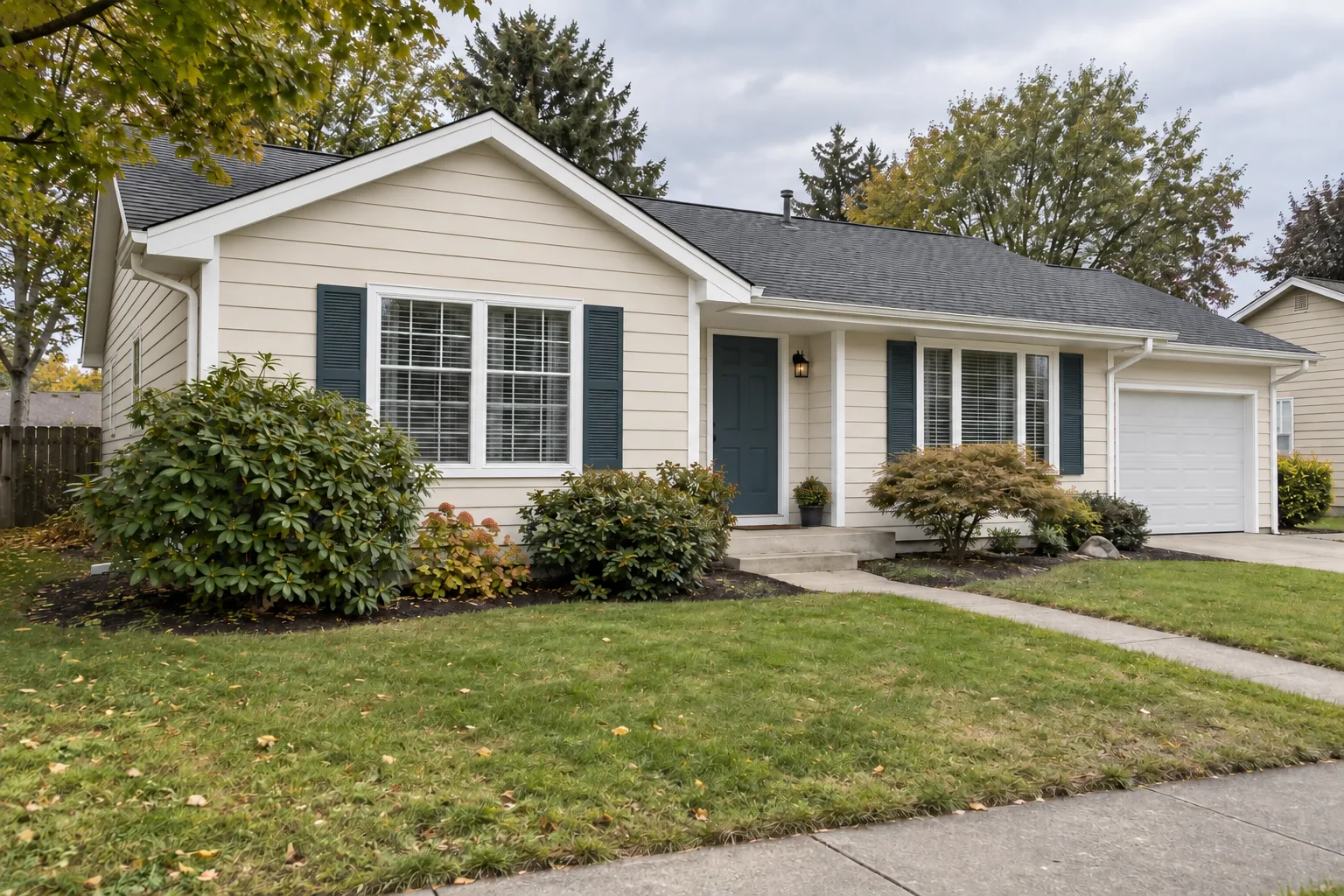
Estimate painting costs by measuring the surfaces you will actually paint, calculating each product separately, and applying the prices available to you. A home's floor area alone does not tell you the area of its walls, ceilings, trim or cabinets.
Use the Paint Calculator to enter your dimensions, coverage, coats, container size and price. It estimates coating quantities and container costs; add preparation, tools, access equipment and labor separately to build a project budget.
Measure Paintable Area Before Comparing Prices
For a rectangular room, wall area is 2 × (length + width) × height. Subtract the measured doors, windows and other surfaces that will not receive that product. A ceiling is length × width if it is flat; measure sloping surfaces separately.
For an exterior, measure each facade rather than multiplying the home's floor area by a fixed ratio. Add triangular gables using base × height ÷ 2, then subtract openings. Measure trim and doors separately if they need a different coating. The Exterior Paint Calculator accepts the resulting surface area.
Calculate Each Product and Round Up to Full Containers
For every paint, primer or stain, use:
Quantity = net surface area × coats ÷ product coverage × (1 + allowance ÷ 100)
Containers = round quantity ÷ container size up to a whole number
Product cost = containers × price per container
Use the coverage and application instructions for the selected product and substrate. A gallon of wall paint cannot be combined with a gallon of cabinet enamel when rounding purchases. Likewise, a remaining half-gallon of primer cannot cover a shortfall in topcoat.
A Worked Bedroom Budget
Consider a 12 × 12 ft room with 8 ft walls. Gross wall area is 384 ft². Subtracting a measured 51 ft² of openings leaves 333 ft² of walls; the ceiling is 144 ft².
The following example uses two finish coats, 350 ft² per US gallon and a 10% allowance. The optional primer example uses one coat at 300 ft² per US gallon. Container prices are example inputs for the calculation, not contractor quotes or market averages.
| Product | Calculated quantity | Full 1-gallon containers | Example price per container | Product subtotal | |---|---|---|---|---| | Wall paint | 2.09 US gal | 3 | $45 | $135 | | Ceiling paint | 0.91 US gal | 1 | $35 | $35 | | Primer, if the chosen system needs it | 1.22 US gal | 2 | $25 | $50 |
The finish-paint subtotal is $170. Adding the example primer brings it to $220. If your tools and preparation supplies cost $40, the example materials budget becomes $260. Replace every price and coverage value with your own product information before purchasing.
Add Costs the Paint Estimate Does Not Include
List cleaning, repairs, sanding materials, masking supplies, brushes, rollers and protective coverings. For exterior work, include safe access and any equipment rental. For cabinetry, include removing and refitting hardware, degreasing and the preparation required by the selected coating system.
When comparing professional quotes, ask for the same scope in each: surfaces included, preparation, named products, coats, protection, cleanup and any taxes or access charges. Separate repairs and optional work so a lower total is not mistaken for an identical service. The calculator does not estimate local labor rates.
Use the Calculator for the Surface You Are Painting
- Ceiling Paint Calculator: flat ceiling dimensions and adjustable coverage.
- Cabinet Paint Calculator: measured door faces, edges, drawer fronts and frames.
- Primer Calculator: a separate preparation product with its own coats and coverage.
- Deck Stain Calculator: measured wood surfaces and product-specific coverage. Check that the coating is suitable for horizontal foot traffic.
Compare Colors Before Buying Paint
Use the Paint Color Visualizer, Exterior Paint Visualizer or Kitchen Cabinet Color Visualizer to compare color directions on your photo. Check physical samples in the space before committing to the final product and quantity.